
Marc-Aurèle Debut: ON REPEAT 25 Jun – 1 Aug 2026
Marc-Aurèle Debut: ON REPEAT 25 Jun – 1 Aug 2026
GLASSHOUSE is pleased to announce 𝘖𝘕 𝘙𝘌𝘗𝘌𝘈𝘛, a solo exhibition by Marc-Aurèle Debut on view 25 Jun–1 Aug 2026 at 5 Warwick Street, London.


On Repeat: Thinking about Love
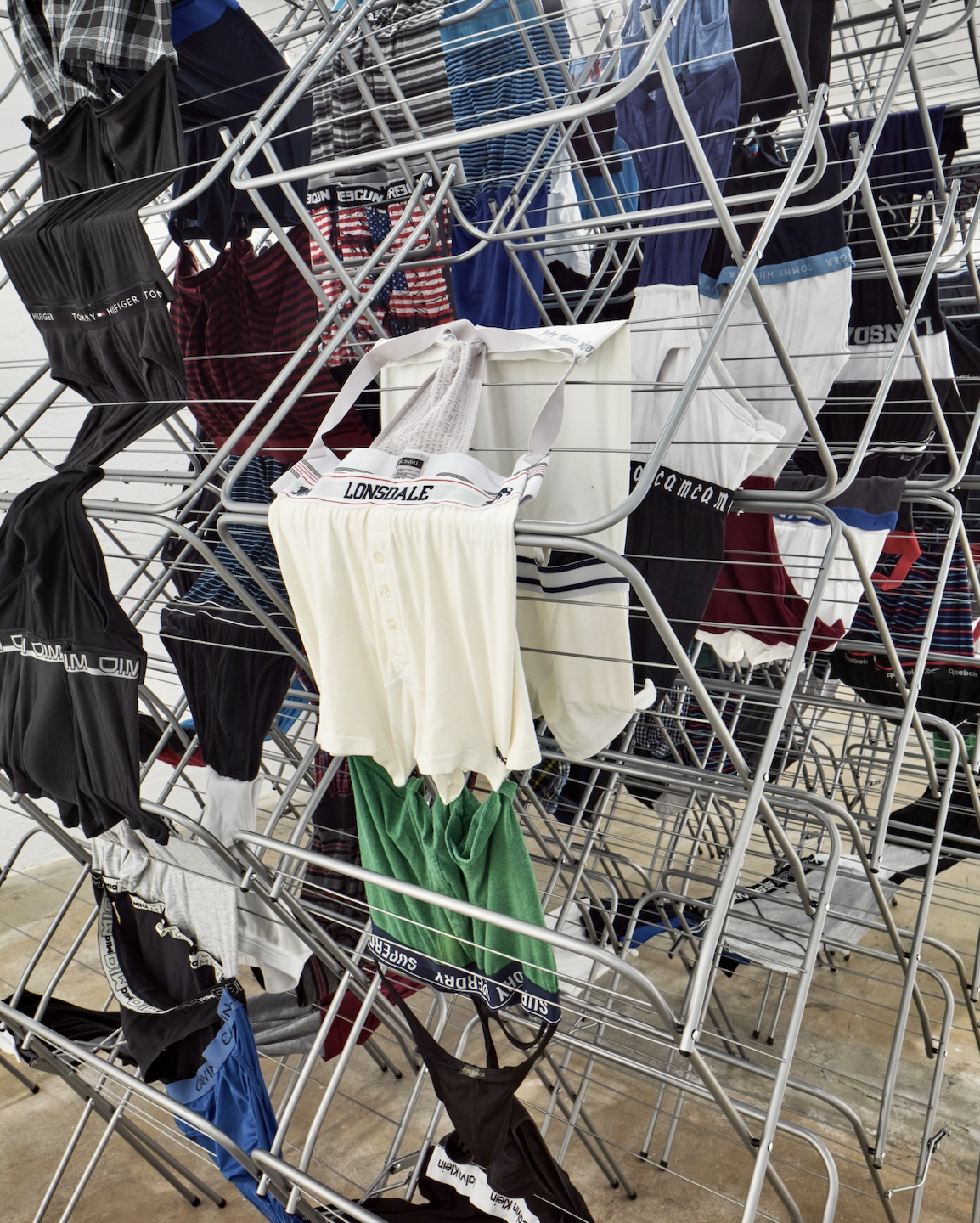
I recognise something here in Marc-Aurèle Debut’s installation, in this seemingly endless scroll of tired and worn underwear, displayed like a vestimentary anti-climax to intimate encounters. How reminded I am of the boys I have slept with, sometimes forgetting about them and they forgetting about me. I myself have boys' underwear, the original owners of which are a mystery to me. Ah the nonchalance and ordinariness of it all! Like when you go cruising and sit down and have a sandwich with a friend while three feet away someone is getting railed; or how a brief moment of intimacy can be as powerful as a life-long relationship; or how our friends were once passionate lovers and perhaps will become lovers again. This is the beautiful thing about some aspects of queerness: sex and intimacy can be both wonderfully intense and wonderfully ordinary.
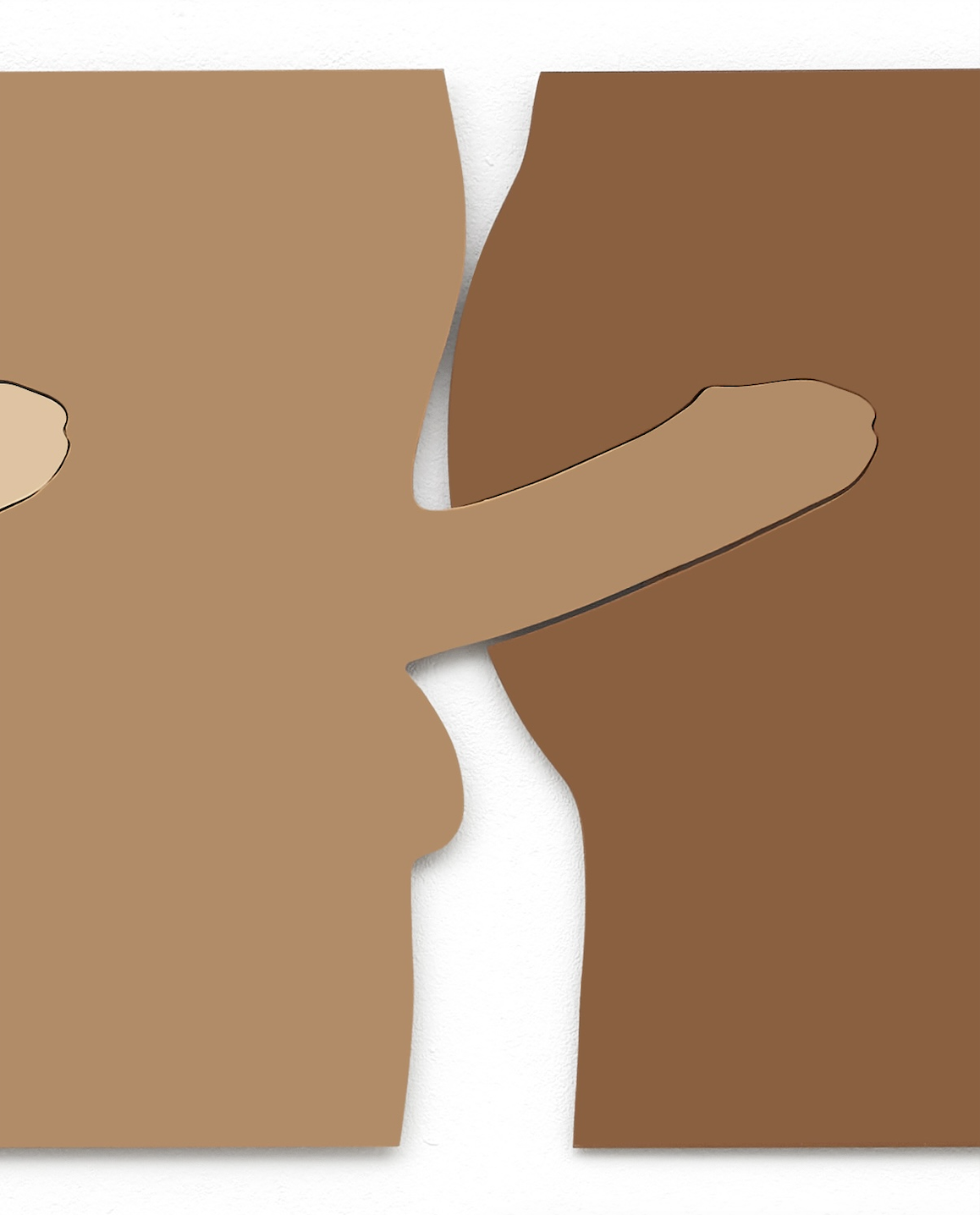
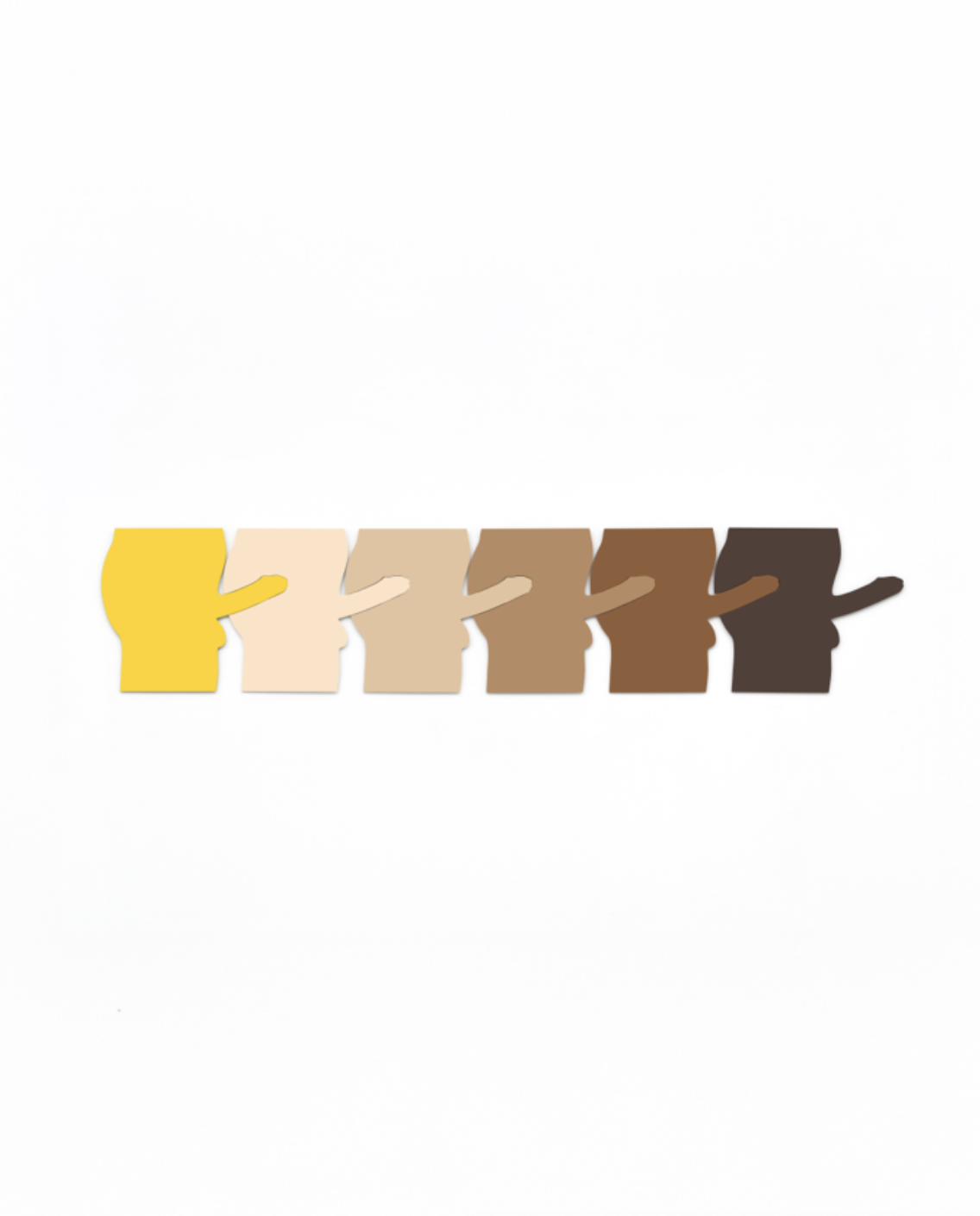
At the same time, when I hear the repetitive, mechanical rhythms of Marc-Aurèle’s sound piece, Auto Repeat, and when I see the underwear arranged like a production line in In Circulation or look at the schematic image of men anally penetrating each other in Emo(r)ji, I also think about what is happening to intimacy, community and connection in an era of individualism and dating apps like Grindr. Look at that underwear, discardable, flimsy, some with holes and worn to death, or look at those dicks and asses with skin colour reduced to something like a Pantone-colour chart. These works make me think about how often I, and so many queer and gay men, have treated one another as disposable, like Amazon orders we can ultimately return. They remind me of how afraid we can be of connection and intimacy because we think there might be better options elsewhere in a supermarket of men we can casually swipe through. They also make me think how often we are afraid of truly connecting with someone because we don’t really want to be wrenched apart by feelings or discover the shocking, uncomfortable reality of self-exposure that comes from deeply relating with someone. I look at all this lightness, I think about the dancing and the drugs, and I think about how I and many men I have known and loved have covered our fear of connection by proclaiming we only want to have “fun”, to be “light”, to be “easy”; we then let people passionately into our lives only to let them go carelessly in a misunderstanding of what it truly means to “let go”.
And my god, there is enough drudgery and heaviness in the world, so I’m all for fun, lightness and ease. I’m also all for the eroticism of the transitory encounter, the thrill and contingency of it, the freedom of exploring the erotic, no matter how brief, in ways that can leave us breathless and beautifully confused and startled. And how too in those encounters we can sometimes feel strangely and utterly ourselves as we are deep inside the intensity of the moment, perhaps with no need to perform.
But experiencing On Repeat, I can’t help but think about loneliness, longing and isolation. Marc-Aurèle told me that when he installed all the underwear, there was a pervasive smell of all the different washing detergents these men had used. For some reason, I found this oddly tender and heartbreaking. How vulnerable we all are, despite our facades of coolness and detachment. How true it is that all of us are just grappling and fumbling our way awkwardly through this eternal mystery we call life and making a right old glorious mess of it. We’re all trying our best. And yet so many of us are ensnared by cultures that organise intimacy around self-interest, possession and optimisation as Marc-Aurèle’s work reflects on. So the question then for me is how might we salvage intimacy as something potentially liberatory in the kinships, responsibilities and the relations it can build –– relations built on the acknowledgement that we are all hurt and hurting, and yet also all capable of loving? How can we move beyond the norms through which love and intimacy are so often regulated and find new, nourishing forms of relation that enlarge, not diminish, our capacities to love and connect?
I’m aware I’m saying “we”, so let me say from the outset that I don’t mean to universalise these experiences. It is a contingent “we” born out of my own experiences and encounters (which is after all the only place I can start from). And yet, however personal this may be, since many of us participate in cultures of competition, transaction and isolation, perhaps this “we” might speak to many of us, at least in western metropolitan centres.
When I visited Marc-Aurèle’s studio and listened to driving techno music and discussed sex, hookups, relationships, sex work and desire, I thought about how much I wanted to go out and dance and be free and easy. And in fact, I did just that. But what is this desire to be “free” and “easy” that so many of us long for? I think how often I have wanted to cry out in frustration to some lovers in my life–– and to myself! –– that there can be no fun without the mess of play, no grace and lightness without gravity and weight, and no ease without consideration and responsibility.
All this requires difficulty and complexity. In a culture that prizes productivity, efficiency and speed, reorienting ourselves toward the heavier and more complex textures of relation requires work and commitment. And since we live in a world predicated on scarcity and possession, the labour and complexity of loving is conceived of as another resource, like coal, that can deplete –– so we have to be wary of how we dole it out. In such an individualistic and competitive landscape, others can begin to appear as threats or assets to manage rather than people to encounter. Relationships become increasingly calculated as we try to mitigate the risks they pose. And god damn it! How often I and the boys I have loved have been too afraid of the risky business of falling in love, too afraid to make our hearts sing and be exuberant and loving and kind and generous because we didn’t want to look too attached, too hopelessly loving, too excited. And so we monitored our words and managed our self-image and ultimately turned away from each other.
This is a somewhat bleak landscape, I admit, and partly provoked by looking at Marc-Aurèle’s Emo(r)ji which deliberately and pointedly flattens the most intimate moment of anal sex into a diagram on a smooth, glossy surface of painted aluminium. Marc-Aurèle makes me ask where is all the life, the remainders and reminders of bodies, smells, sweat, semen, the longing and the agony, the pleasures and the confusions, the shit and the passion? We are human, of course we want the rawness of body and touch! But then there is an opposing force in our society which tells us that what we really should want is a life of smoothness, free from labour and effort, as if people and relationships should be like the wipe-down surface of a kitchen counter.
We see this display of effortless, cool smoothness in the way some aspects of queerness become a mere style and image to flaunt, rather than a mode of relation to practice. There is in this image of queerness a kind of disdain of ordinariness, drudgery, anxiety and the child-like earnestness of excitement. I find a peculiar resonance here with the Renaissance idea of “sprezzatura” that was popularised in conduct manuals of the period. Loosely translated as a “certain nonchalance”, the courtier was urged to conceal all art and labour so that everything they did appeared effortless. Sprezzatura is a complex term, but in short, it concerned a performance of ease and superiority with an aristocratic disdain for vulnerability (even if it emerged from anxiety about status). But if the courtier worked hard but concealed the effort, it seems today there should be a disavowal of effort all together. And so desirability seems to be increasingly tied to appearing breezily self-sufficient, detached and somehow existing beyond the aching mess of being a flawed and fucked up human being.
But where does this fear of showing our vulnerable and longing sides come from? Why this armoured individualism? Why this terror of closeness and intimacy? Why this fleeing from responsibility for the other as soon as we get closer to them? I think we surely know that when the richer textures of opened souls and bodies come together, we have not only the source of difficulty and conflict, but also the condition of warmth and vibration –– and so of passion and of song? Why do we run away from the other when, through our relation to them, we are able to glimpse the holy enigma of their life as well as our own dark and beautiful mystery –– all so unexplainable, painfully and brilliantly unknowable? Marc-Aurèle’s In Circulation seems to put back the mess that Emo(r)ji removed.
I have wondered why these difficulties and complexities we encounter in relationships are interpreted only and prematurely as faults and not as something potentially generative –– something that can bring us closer together, not push us apart. For me, the question isn’t how do we rid difficulty from a relationship (every relation is difficult because every one of us is hurt, traumatised and complex), but how can we turn to it to expand, rather than erode, mutual growth and understanding? How can we remain with the irreducible mystery of another person without fleeing before we are changed by the encounter?
This requires commitment. And as Marc-Aurèle’s installation reflects on, if we are constantly open to the circulation of bodies and wants and treating people as ultimately disposable, the very idea of commitment feels restrictive, a sort of sad downer when we’re having a really good time. Of course, there are relationships that diminish, wound and crush us and leaving someone is not an evasion of responsibility but an expression of it. Sometimes we have to lovingly and fiercely let our lovers go. And it’s true too, that sometimes it’s not that deep, we just aren’t aligned in our lives. But I think a more useful way of thinking about commitment is not concerned with staying with someone indefinitely, but practicing a commitment to the conditions that allow intimacy, kinship and mutual flourishing to emerge in the first place. It is a commitment to relating responsively and generously, to recognising that our encounters matter and make claims upon us, however brief those encounters may be. We are not responsible for continuing every relationship and encounter, but we are responsible for how we enter, inhabit and leave them. We can still treat a hook up or a six-month “situationship” with an ethic of responsibility because we can recognise that every encounter is between vulnerable, desiring and wounded human beings. Commitment, understood in this sense, is not the opposite of freedom but one of the conditions that makes meaningful freedom possible.
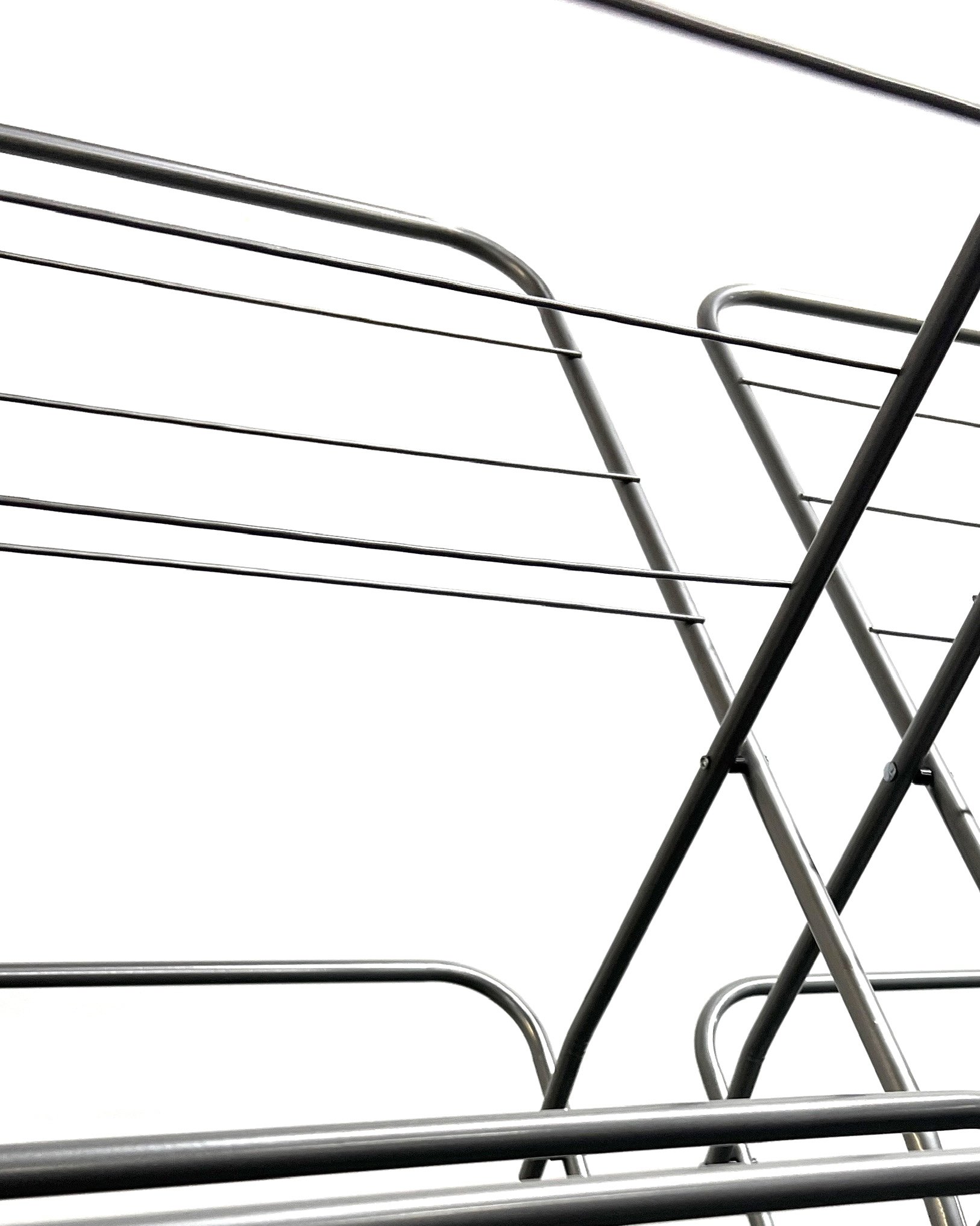
So when I look again at Marc-Aurèle’s pageant of underwear looping up and down on those clothing racks, I see not only disposability and circulation, but also a gathering of intimacy and vulnerability — a desire to come together and, in E.M. Forster's words from Howard’s End, to "only connect” and “live in fragments no longer”. I see now the most intimate parts of clothing touching one another as a great chain of fragile connection. And I hear in the techno music not just the angry isolation I have sometimes felt in techno parties, drugged up, lonely and longing, but also the euphoria and pleasureof dancing wildly in community with so many bodies of all shapes and sizes and with a queer community fiercely brought together out of both love and hurt. Both / and, not either / or. An abundance (how I wish this word hadn’t been so vacuously co-opted by social media), not just an accumulation.
“Without contraries there is no progression”, William Blake wrote. And so just as in Marc-Aurèle’s work here, we might try to make room for a myriad of feelings and thoughts, contradictory and confusing, knowing that being human isn’t about trying to package ourselves neatly as if we were a branded product. It is this sense of overflow and tension that reminds us that intimacy is a continual negotiation. We cannot dictate the terms of it, but we can groove channels of relation that do not shy away from complexity and contradiction, from pain and hurt as much as desire, pleasure and ease.
When new relational possibilities emerge, they create new openings. This is precisely when we must remain fearless and committed. Systems might try to regulate these flows to serve the interests of certain groups or capital, but they can never be totalising. As Foucault wrote in a beautiful interview, “Friendship as a Way of Life” (1981): “To imagine a sexual act that doesn’t conform to law or nature is not what disturbs people. But that individuals are beginning to love one another –– there’s the problem.”
Permit to turn finally and clumsily this word love –– lord, just saying it feels embarrassing and huge! –– which I am aware has had thousands of years of brilliant and not-so-brilliant thought and action attending to it. The hopeless lover boy in me wants to turn to it and eros and let them make problems of systems and thinking that would regulate and dam up the total expansiveness that can come from loving someone. When I have felt meaner, harder and tighter as my heart was at once so carelessly and lovingly broken by someone, my dad had cried to me, please, never stop loving! And it is true, it is truly reparative this connection and commitment to love and eros –– where love and eros can be understood as a recognition of our interdependencies in a field of relation far greater than our petty fears and egos, our hurts and pains. Hurt begets hurt, but so does loving beget loving too. It’s so hard to say this without seeming soppy and sentimental, but I’m going to put my neck out on the line and say it. Love and eros cannot, must not submit to a culture of scarcity, possession and extraction. Love and eros, like the artistic imagination, don’t diminish by being shared. They proliferate, expand and grow. How reminded I am of a beautiful passage in the Song of Solomon, that fabulously erotic section of the Old Testament, where the poet writes: “for love is as strong as death [...] Its flashes are flashes of fire, the very flame of the Lord. Many waters cannot quench love, neither can floods drown it.”
So, my dear Marc-Aurèle, my dear boys who have entered my life and I into theirs whether for an hour or for months or potentially for a lifetime, I hope that love and eros will come into our bruised and fearful hearts when we find someone else’s underwear, when we are dancing together and when we are deep inside the body and souls of our lovers. And in those moments, may we turn toward and not run away from the ever growing pleasure, beauty and terror of relation again and again, on repeat, always failing, but, yes, always trying, trying to learn what it means to love.
Yates Norton, June 2026
The exhibition features a sound piece titled, Auto Repeat, 2026 (4 min 25 sec).
Marc-Aurèle Debut works across sculpture and installation, constructing environments where bodily presence emerges through repetition, pressure, accumulation, and material tension. Recent projects have expanded into sound, extending these concerns into immersive spatial installations. Drawing from lived experience within queer spaces and cultures, his practice examines how desire, intimacy, and power become embedded within objects, surfaces, and spatial systems. Using materials such as upholstery foam, latex, leather, resin, springs, supplements, and collected objects, he creates works that oscillate between attraction and discomfort, softness and control. Rather than representing the body directly, his installations approach it through traces, residues, and repeated forms, positioning viewers within unstable relationships of proximity, vulnerability, and constraint.